Industrial Automation & Software Engineering
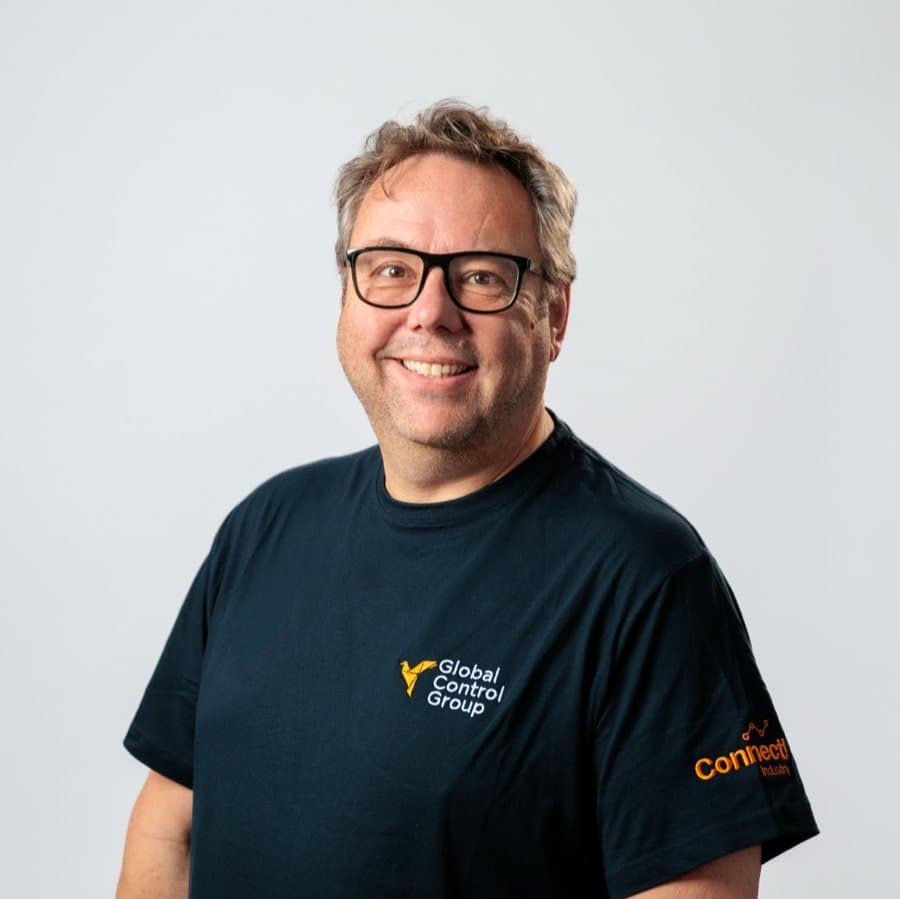
Portrait photo of Raymond Consen-Tump, Global Control Group

Global Control Group

Raymond Consen-Tump

Co-Owner: Senior Automation Engineer

Raymond has been writing control software for more than 35 years. PLC, HMI, motion and commissioning run through his work, from production machinery to marine installations. At GCG, he works on control architecture, software development and technical execution, from design to commissioning.

Experience

Raymond developed PLC and HMI software for industrial installations and worked on electrical design, motion and system interfaces. He commissioned bakery lines, factory installations and marine controls, including extended international assignments on site. He brings this earlier project experience through RaCo Automatisering into GCG.

Raymond still prefers to work close to the technology. A design earns its value when the machine does what it needs to do. His work therefore often extends from system architecture and software to testing and commissioning on site.

Explore the project stories

Expertise

  • PLC programming
  • Electrical engineering
  • Motion control
  • Functional safety
  • Commissioning
  • IT/OT integration

Platforms

  • B&R Automation
  • Siemens
  • WAGO
  • CODESYS
  • Omron
  • Pilz

Technologies

  • OPC UA
  • Modbus TCP/RTU
  • PROFINET
  • PROFIBUS
  • POWERLINK
  • CAN-bus

Industries

  • Machine building
  • Food & bakery
  • Textile machinery
  • Maritime automation
  • Heavy industry

Certificates

  • TÜV functional safety (EN ISO 13849-1 / EN 62061)
  • B&R Open Safety
  • Pilz PSS3000
  • Microsoft Certified Systems Engineer (MCSE)

Teaching & knowledge transfer

B&R, PLC programming and electrical control.

Raymond teaches practical courses and has been a teacher at De Techniekschool in Woerden for more than ten years. GCG works closely with the school on PLC programming, electrical fundamentals and control circuits.

Raymond in practice

Understand the machine. Write the software. Commission it in person.

A dough line, a quilting machine, a factory and a sailing system. Four different settings in which Raymond worked from design through commissioning. These stories describe his personal experience before GCG, including his work through RaCo.

01 / Bakery · Motion control

Test the controls first. Then convert the production line.

On a dough line, motors were adjusted individually. Differences in speed affected dough thickness and cut product dimensions. How do you coordinate the line while accommodating many different recipes?

Raymond’s contribution

Raymond supervised electrical engineering, cabinet construction and installation. He developed the PLC and safety software himself and commissioned the line. The new controls coordinated motion using B&R servo technology and POWERLINK. Recipes in the operator interface made settings reusable.

Before conversion, the controls and drives were assembled and tested in a test setup. That preparation mattered because the changeover took place in an existing production environment. Another line added a distinctive motion challenge: winding puff pastry around a tapered mould, using thirteen synchronised axes.

What defines this work

Prove the relationship between motion, recipe and product before conversion.
02 / Textiles · Retrofit

New controls that preserve years of pattern design.

Water damage had affected a quilting machine’s control cabinet. The mechanics were still usable, but electrical drawings and a description of the machine’s operation were almost entirely missing. Replacing the electronics alone would not be enough.

Raymond’s contribution

Raymond reconstructed how the machine worked with the operator, a former mechanic and production management. He renewed the controls with a B&R PowerPanel and ACOPOS servo technology. Much of the mechanics was retained, while two servo axes replaced the old DC drives.

The existing pattern files also had to be preserved. The old DOS design program used an undocumented format. Raymond investigated the file structure and wrote a converter so existing designs could run on the new controls. This retained both the machine and the accumulated pattern design work.

What defines this work

A retrofit also needs to preserve the knowledge held in operation and files.

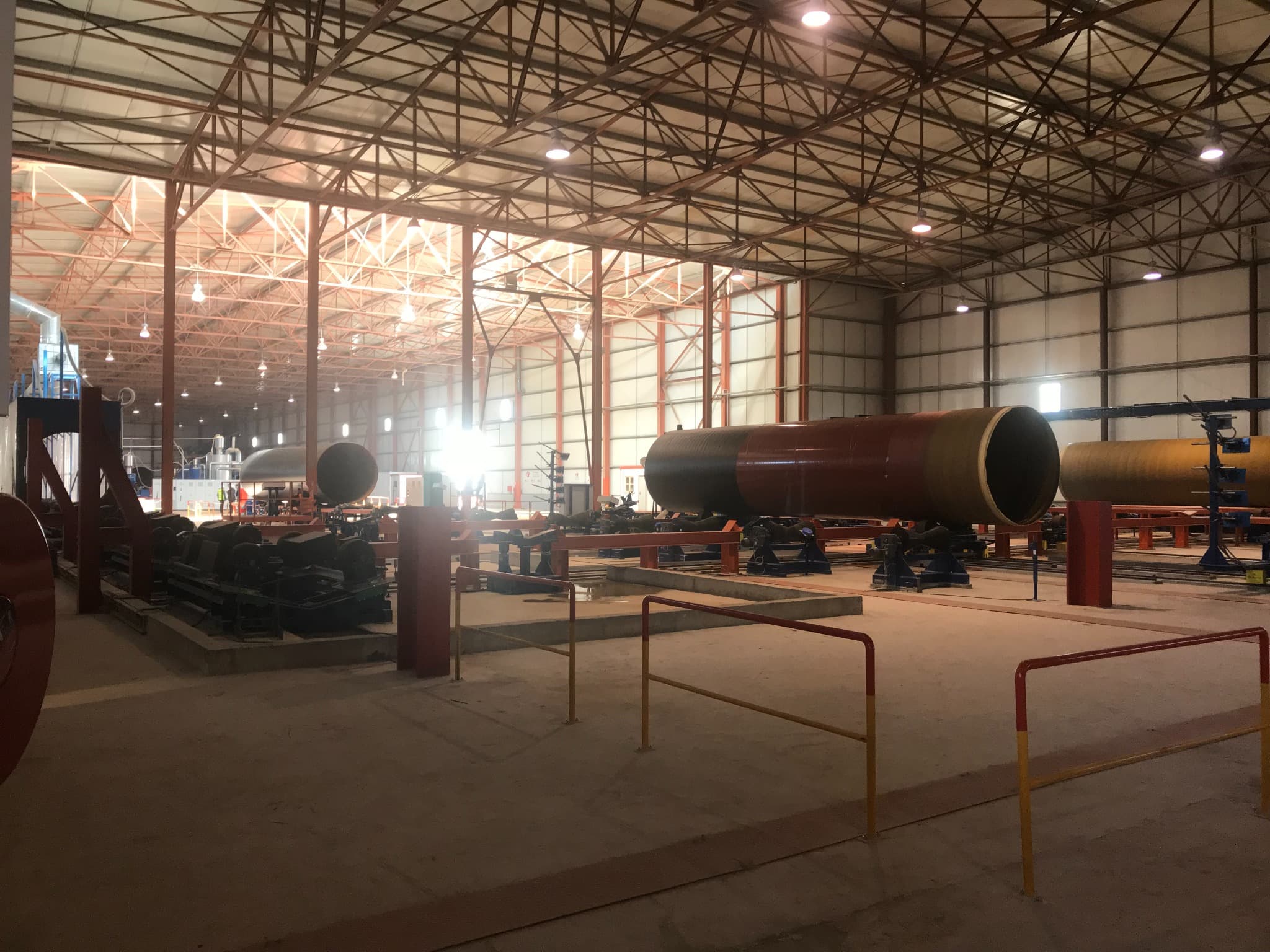
03 / Pipe coating · Commissioning

From software to an operating factory.

A pipe-coating plant brings together transport equipment, process installations and safety functions. Software has to work at machine level, and the interaction between systems must also be tested on site.

Raymond’s contribution

Raymond developed PLC and safety software and worked through the stages from I/O testing to commissioning and aftercare. He personally carried out software commissioning and startup on site, building this experience at plant installations in several countries.

This work connects design with the reality of the plant floor: checking signals, testing software with the connected installation and supporting startup. His involvement continued beyond writing code, through commissioning and aftercare.

What defines this work

The software developer stays involved in how the physical installation behaves.

04 / 127M sailing yacht · System integration

Designing, programming and testing on board.

On a large sailing system, operator controls and the movement of masts, booms and sails have to work together as one system. Ultimately, the design has to prove itself on board.

Raymond’s contribution

Raymond was responsible for automating the sailing system of a 127-metre sailing yacht. He designed the controls and wrote the software from the ground up. His role continued through commissioning and startup on board.

He also joined the sea trials. The same engineer therefore remained involved from software and system design through to operation on the water. This personal project experience is part of the technical background he now brings to GCG.

What defines this work

Taking responsibility from the initial design through to practical testing.

Pipe processing in a production hall.

Knowledge transfer

Discussing engineering decisions. Sharing experience.

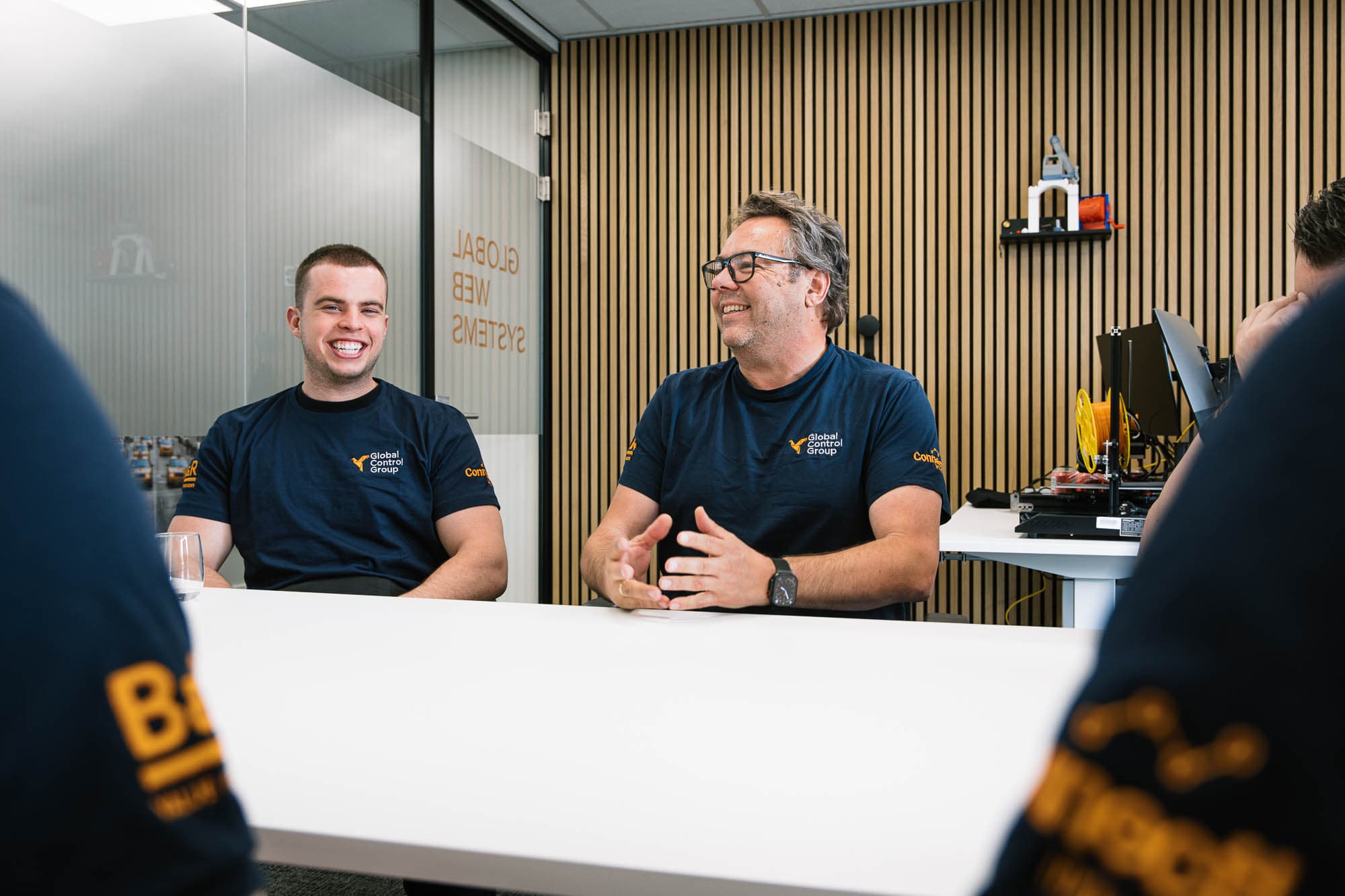
The GCG team in discussion around the office table
A team discussion at GCG’s Volendam office.

Raymond combines his work as a senior automation engineer with technical guidance within GCG. His experience in PLC/HMI, motion, system design and international commissioning is actively shared within the team.

Lucas, Nick and John each carry responsibility within their discipline. Knowledge transfer supports the technical decisions and execution of their work: machine control, embedded software and industrial applications.

The people at GCG

Engineering experience · Machine building

Four special-purpose production machines for DeRaKo.

Raymond designed the controls and wrote the software. DeRaKo, Blom Opmeer and NewIO handled the concept, mechanics, EPLAN and panel building.

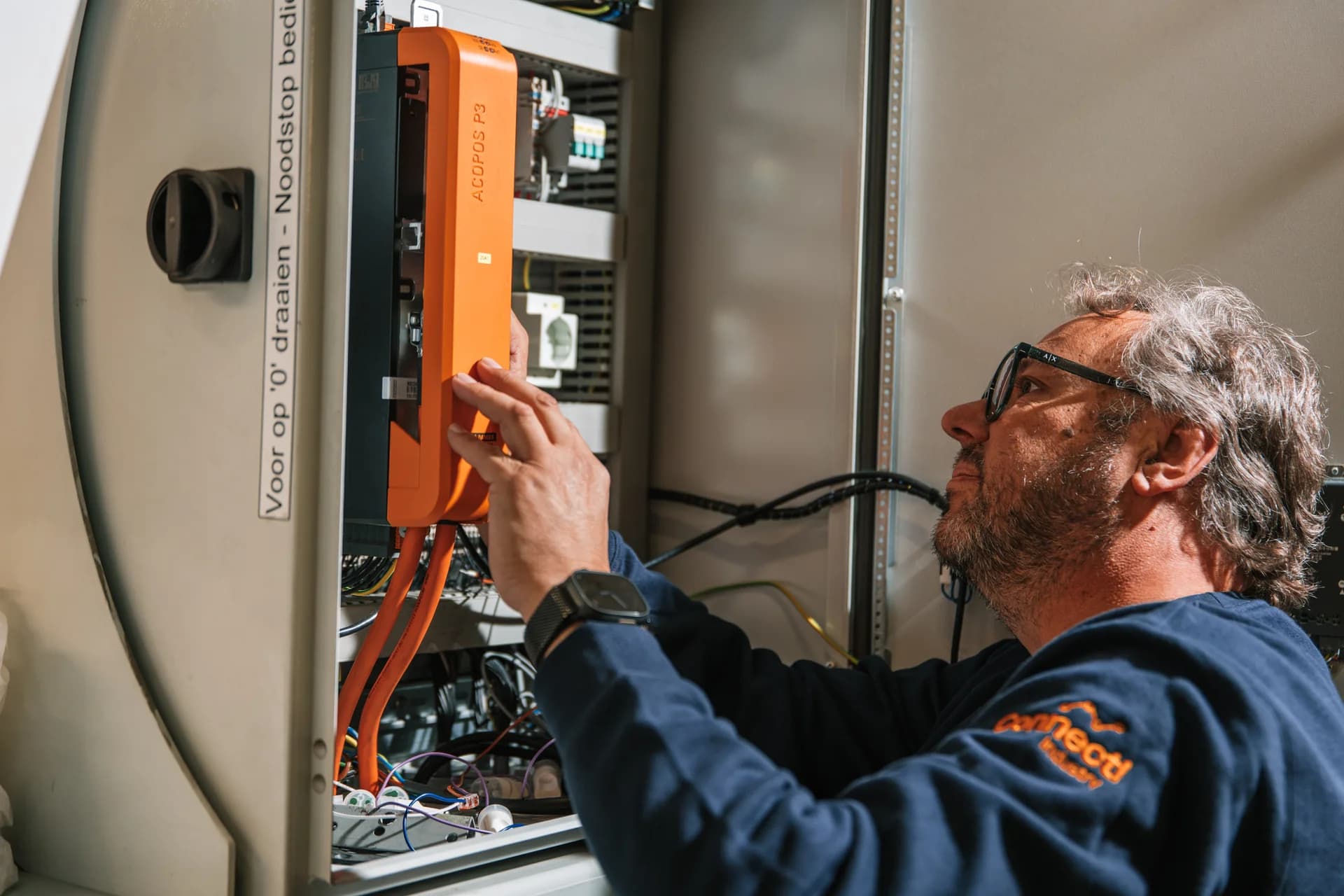
Raymond working with a B&R ACOPOS drive in a control cabinet

Business outcomeFour special-purpose machines equipped with control software for grill ceiling production.

Renewing an existing machine or starting up an installation?

Tell us what your installation needs to do, what is already in place and where the engineering challenge lies. That is the starting point for a conversation with Raymond and the team.